



Values and Virtues

As social beings, we grow up within a culture shaped by generations before us. The way young people learn, question, and embody these values shapes not only their own well-being but also the moral fabric of the world they will help create.
“Integrity is doing what’s right, not what’s easy.”
Every community and classroom rests on shared values — the invisible threads that hold people together.
Values and virtues guide how we live, act, and relate to others. They help us know what’s important — honesty, kindness, fairness, courage, and respect — and give us the strength to live by it.
Why Values and Virtues Matter
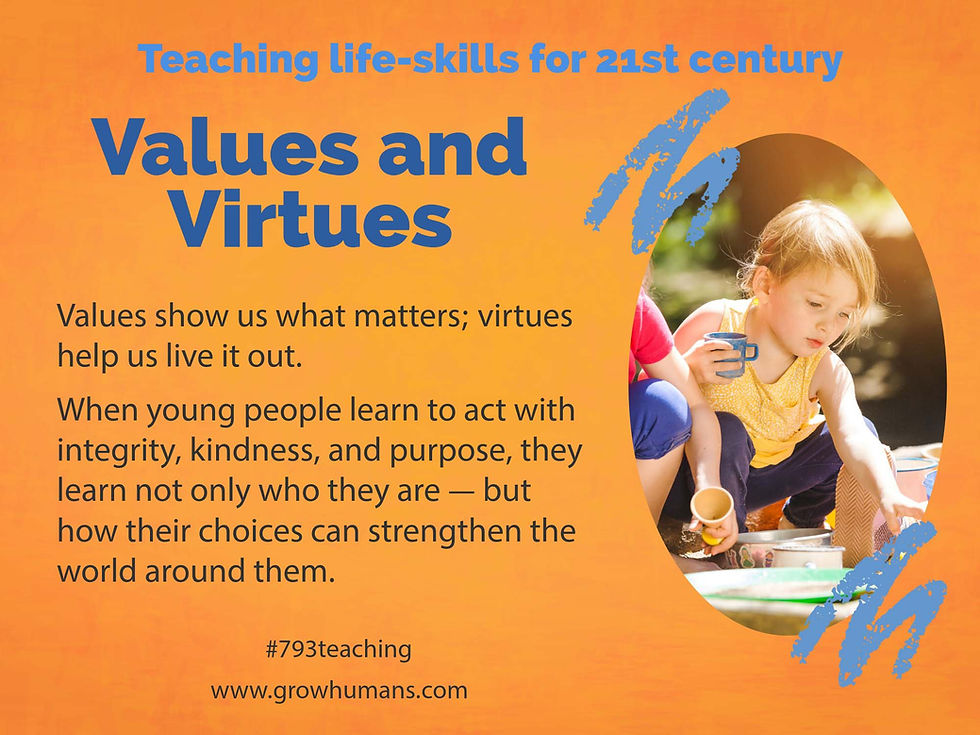
Values show us what matters most. Virtues help us live those values in everyday life.
When young people internalize positive values, they learn to:
Distinguish right from wrong.
Show empathy and respect.
Act with integrity and compassion.
Find purpose and meaning.
Research shows that children and youth with a strong sense of values experience greater happiness, resilience, and social responsibility. The values and virtues developed in childhood and adolescence become moral anchors for adulthood — guiding relationships, choices, and well-being.
The Role of Education
Every classroom teaches values — not only through lessons, but through relationships, expectations, and everyday moments.
Supporting values and virtues in education means:
Modeling honesty, kindness, and respect.
Encouraging open dialogue about fairness, justice, and care.
Recognizing acts of moral courage and compassion.
Helping young people connect choices with meaning and responsibility.
When schools nurture shared values, they create communities where trust, empathy, and cooperation can grow.
Growing Values and Virtues Through the Ages
Infancy (0–3 years): Learning trust and care through warmth and consistency.
Teacher’s role: Modeling kindness, safety, and predictable care.
Preschool (4–6 years): Understanding fairness and sharing.
Teacher’s role: Using play and stories to highlight honesty and empathy.
Early School (7–10 years): Exploring rules and justice.
Teacher’s role: Discussing right and wrong, praising honesty and fairness.
Tweens (11–13 years): Questioning beliefs and authority.
Teacher’s role: Encouraging dialogue about respect, equality, and differences.
Teens (14–18 years): Forming personal values and ethics.
Teacher’s role: Supporting reflection, debate, and service learning that connect values to action.
Impact for Students, Teachers, and Families
Helping young people discover and live their values gives them purpose, empathy, and direction. Education is not only about outcomes; it’s about becoming the kind of person who leads with integrity and meaning. When values and virtues are central to school culture, learning reaches beyond achievement to integrity, purpose, and responsible action.
© dr. Kristijan Musek Lešnik & Growhumans.
Like our posters? All text and visuals are original works.
Sharing is welcomed. Reposting or reproduction without credit is not permitted.
Please tag @GrowHumans when sharing.



Comments