



Supporting teachers/educators who shape minds, hearts, and futures!
Positive Pychology
Positive psychology is the scientific study of the positive side of human life: wellbeing, meaning, optimism, hope, perseverance, and resilience. It broadens psychology’s focus from fixing problems to cultivating strengths and flourishing. Grounded in research and applicable in daily life, positive psychology aims to enhance quality of life for individuals, organizations, and communities—alongside, not instead of, traditional care.
What is Positive Psychology

For decades, psychology made lifesaving progress treating distress and disorder. Positive psychology keeps that progress—and widens the lens. It asks: what conditions help people thrive? In short: traditional psychology reduces distress; positive psychology enhances well-being. So positive psychology isn’t a substitute for traditional psychology. It simply adds another dimension — focusing not only on reducing suffering, but also on building strengths and flourishing.
Why Did Positive Psychology Emerge

For decades, psychology focused mainly on healing — on understanding what goes wrong in the human mind and how to repair it. Yet over time, many researchers and practitioners began noticing something important: the absence of problems is not the same as the presence of well-being. People can be free from distress and still feel unfulfilled, directionless, or disconnected. This realization opened the door to a new question: What helps human beings truly thrive, not just survive?
Positive psychology emerged as a response to that question.
When Did Positive Psychology Emerge

Positive psychology began to take shape when psychologists started asking an important question: Is well-being more than just the absence of suffering? The term itself became widely known in the late 1990s, but the ideas behind it are much older. Throughout 20th century, thinkers such as John Dewey, Viktor Frankl, Abraham Maslow, and Carl Rogers emphasized strengths, meaning, growth... Long before the movement had a name, they argued that psychology should be judged not only by how well it heals distress, but by how much it helps people and societies flourish.
The Myth of Constant Happiness

One modern trap is treating happiness like a trophy at the rainbow’s end. The pressure to be constantly happy only adds frustration for those who are struggling or feeling unhappy.
Happiness is not a prize to be found at the end of a rainbow.
It is often a spontaneous side effect — something that happens when we do meaningful things, with people who matter to us.
We don’t discover happiness by chasing it.
We stumble upon it while being deeply engaged in activities that give us a sense of purpose and connection.
The Foundations of Positive Psychology

At its core, positive psychology is grounded in the belief that well-being can be cultivated. Rather than seeing happiness as a stroke of luck, it views it as the result of developing strengths, meaningful relationships, and the skills that help people navigate life’s challenges with resilience and purpose. It does not pretend to eliminate less pleasant aspects of life. But it does aim to help people become happier, more satisfied, more optimistic, and better equipped to face life’s difficulties — so that when challenges come, they can meet and overcome them more easily.
What Is Subjective Well-Being?

Subjective well-being (SWB) is one of the central pillars of positive psychology. It reflects our inner response to life — our personal evaluation and emotional experience of how we are truly doing. At its core, it is that quiet inner verdict: “I’m doing well.”
Subjective well-being isn’t measured by what we own or how impressive our life appears from the outside. Instead, it grows from the balance between how we think our life is going and how we feel as we move through our days.
Positive Psychology and Positive Education
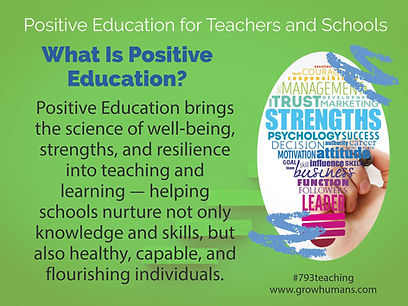
The term positive education is even younger than positive psychology.
Its meaning, however, is simple: positive education brings the insights, methods, and techniques of applied positive psychology into the school environment.
Positive education connects psychology and educational science — combining the insights of positive psychology with effective teaching practices to encourage and support the fulfillment of the potential of individuals, schools, and communities.

