



Emotional Intelligence

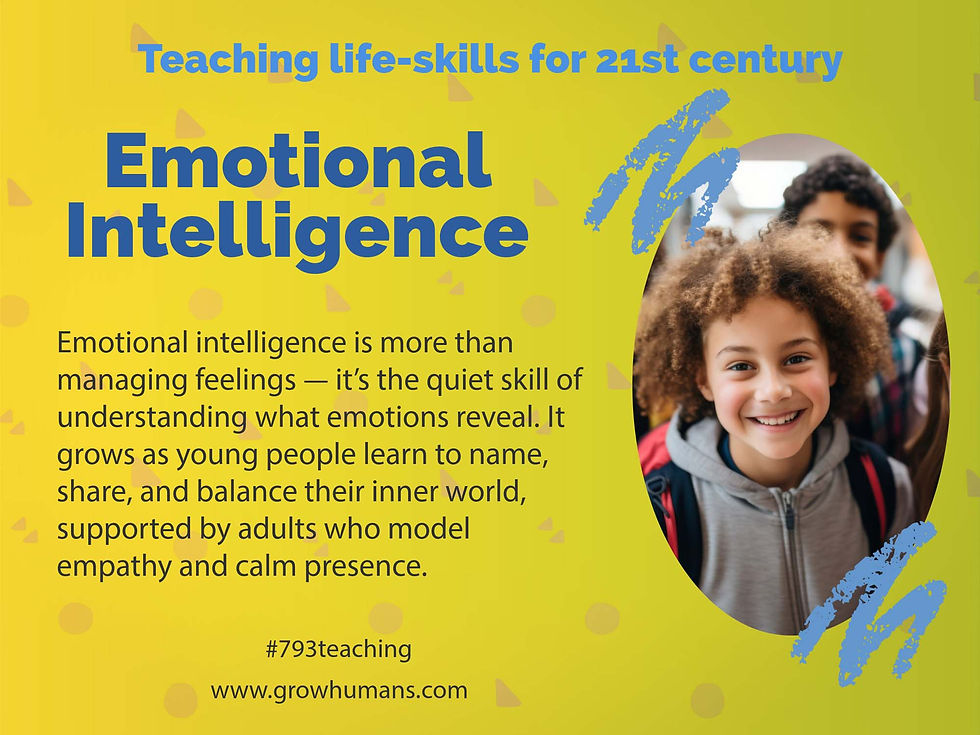
Every human emotion tells a story. Emotions like joy, fear, anger, and sadness are natural signals — helping us recognize what matters and how to respond.
Emotional intelligence helps children navigate challenges, build empathy, and form healthy relationships.
“Emotions connect us — to ourselves and to others.”
Why Emotional Intelligence Matters
As human beings, we are emotional before we are rational. How we feel shapes how we learn, think, and behave.
Children who can name and regulate their emotions are better able to focus, cooperate, and recover from setbacks. They develop empathy, confidence, and resilience — skills that last a lifetime.
Research shows that emotional intelligence developed in childhood strongly predicts well-being, relationships, and mental health in adulthood.In other words, the emotional tools we learn early become the compass that guides us through life.
Why It Belongs in Education
Learning about emotions in preschools and schools isn’t a “nice extra” — it’s essential. When we help children and teenagers understand and express feelings safely, we’re laying the foundation for lifelong learning and healthy development.
Supporting emotional intelligence in education means:
Creating emotionally safe environments where students can express themselves.
Modelling calm, respectful emotional regulation.
Encouraging reflection and empathy in daily lessons and interactions.
When we normalize emotions in the classroom, we give students permission to be human — and the tools to grow into emotionally balanced, self-aware adults.
Emotional Growth Through the Ages
Each developmental stage offers unique opportunities to nurture emotional understanding and regulation.
Infancy (0–3 years): Children learn through faces, voices, and touch that emotions are safe and manageable.
Teacher’s role: Providing warmth, stability, and responsive care.
Preschool (4–6 years): Children start to name emotions and recognize them in others.
Teacher’s role: Using stories and play to explore feelings; showing that all emotions are valid, but behaviours have limits.
Early School (7–10 years): Children connect emotions with actions and begin learning self-regulation.
Teacher’s role: Teaching calm-down strategies and empathy through reflection and dialogue.
Tweens (11–13 years): Emotions become stronger and more complex.
Teacher’s role: Creating space for open talks about feelings, identity, and friendship.
Teens (14–18 years): Adolescents search for identity, values, and meaning.
Teacher’s role: Discussing real-life emotional challenges and helping them connect emotions with choices and relationships.
Impact for Students, Teachers, and Families
When emotional intelligence becomes part of everyday teaching, children and youth gain empathy, resilience, and confidence.
Learning and strengthening emotional intelligence in preschools and schools builds a bridge between knowing and caring, between thinking and feeling. It helps create classrooms where learning is not only about knowledge — but also about understanding ourselves and one another, fostering resilience, collaboration, and motivation to grow.
© dr. Kristijan Musek Lešnik & Growhumans.
Like our posters? All text and visuals are original works.
Sharing is welcomed. Reposting or reproduction without credit is not permitted.
Please tag @GrowHumans when sharing.



Comments