



Supporting teachers/educators who shape minds, hearts, and futures!
Prosocial Behavior
Learning to Care, Share, and Contribute
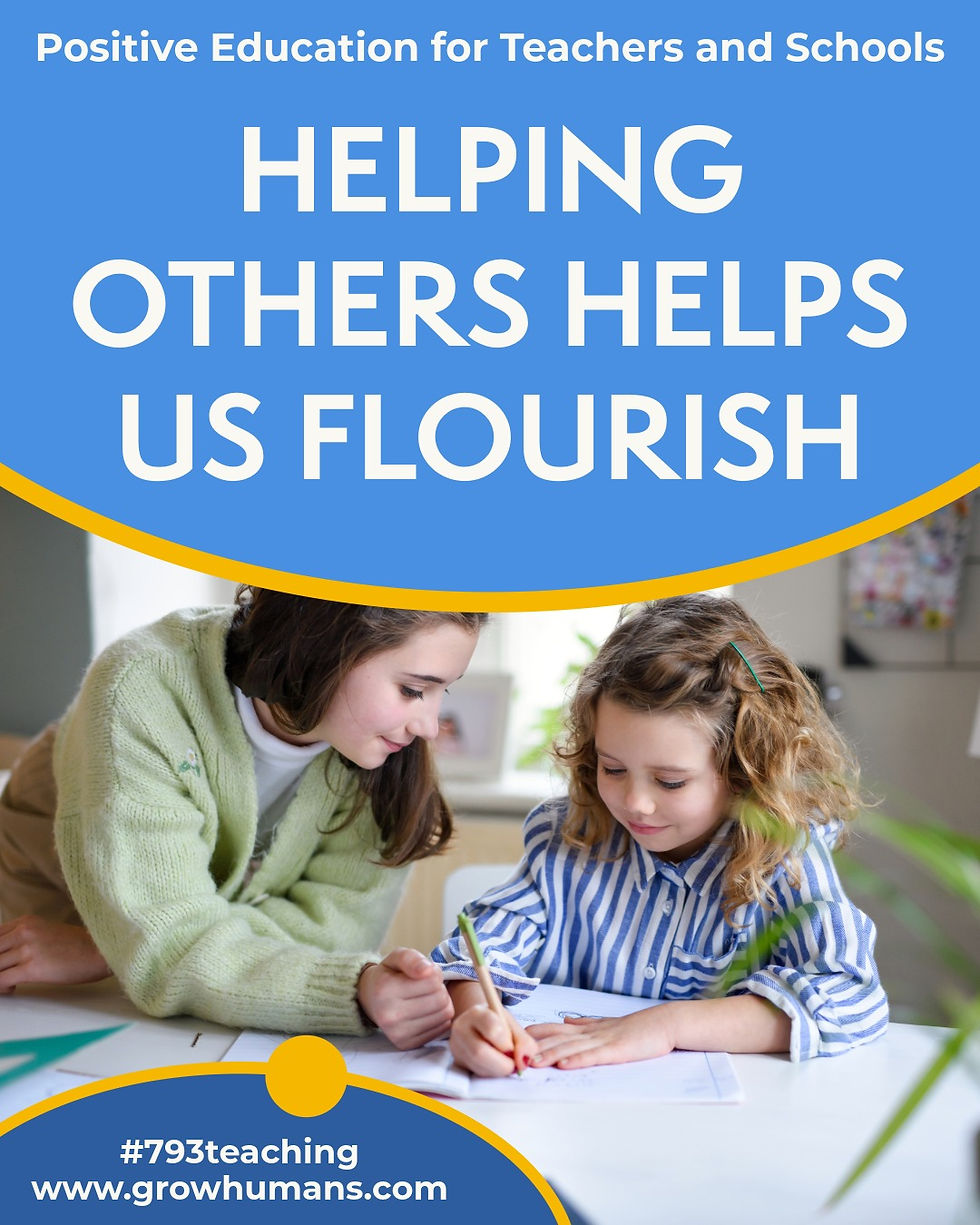
Helping others is more than a social skill — it’s a pathway to well-being.

From the earliest years of life, young people are drawn toward connection. A baby smiles back, a toddler offers a toy, a young child comforts a friend who is sad. These simple gestures are the roots of something deeply human — our prosocial nature.
Prosocial behavior includes all actions aimed at helping, sharing, comforting, and cooperating with others. It’s how we express empathy, kindness, and moral understanding in everyday life.
Because we are social beings, the need to connect and care for others is ingrained in us. Nurturing this capacity helps young people not only build healthy relationships but also find meaning, belonging, and happiness.
Why Prosocial Behavior Matters
Helping others is more than a social skill — it’s a pathway to well-being. Research in positive psychology shows that kindness and generosity enhance happiness, reduce stress, and strengthen social bonds.
When young people act with empathy and compassion, they experience the joy of contribution and the satisfaction of making a difference.
Developing prosocial behavior also supports moral and emotional growth. Through helping, young people learn fairness, responsibility, and respect. They begin to understand that their actions have real impact — on others and on their community.
The prosocial habits formed in childhood — like empathy, cooperation, and altruism — have lasting effects. Adults who learned to care and give early in life tend to experience greater well-being, deeper relationships, and stronger mental health.
Why Prosocial Learning Belongs in Education
Preschools, schools, and teachers are in a unique position to shape how children and youth relate to others. Academic learning and social-emotional learning are not separate; they reinforce one another.
Supporting prosocial development in education means:
Encouraging empathy and cooperation in daily interactions.
Providing opportunities to help others, from classroom tasks to community projects.
Discussing real-life moral dilemmas and choices.
Modelling respectful communication, fairness, and care.
When prosocial behavior becomes part of the school culture, classrooms turn into caring communities where students feel connected, valued, and responsible for one another.
Prosocial Development Through the Ages
Infancy (0–3 years): The Roots of Empathy
Even before language develops, infants sense others’ emotions. When caregivers comfort or share joy, babies learn that caring relationships feel good and safe.
Teacher’s role: Offering warmth, mirroring emotions, and responding sensitively. Laying the foundation for empathy with gentle interactions.
Preschool Years (4–6 years): Learning to Help and Share
Preschoolers begin taking another’s perspective and showing early signs of empathy. They love to help — to hand, carry, or comfort — even in simple ways.
Teacher’s role: Encouraging helping behaviors, modelling kindness, and celebrating caring acts. Using stories to discuss fairness and feelings.
Early School Years (7–10 years): Understanding Fairness and Rules
Children and youth begin to understand fairness and justice. They notice when something is “not fair” and start reasoning about right and wrong.
Teacher’s role: Guiding group activities that promote cooperation, responsibility, and teamwork. Discussing the importance of fairness, honesty, and inclusion.
Tween Years (11–13 years): Expanding Empathy and Responsibility
Preteens become more aware of others’ needs and begin to feel empathy beyond their immediate circle. They start considering social values and peer expectations.
Teacher’s role: Providing opportunities for peer mentoring, cooperative projects, and reflection on ethical questions. Supporting them in handling peer pressure positively.
Teenage Years (14–18 years): Acting on Values and Purpose
Adolescents seek meaning and identity. Prosocial behavior becomes linked to values, social justice, and moral conviction. Helping others builds purpose and belonging.
Teacher’s role: Encouraging community service, volunteering, and student-led initiatives. Facilitating discussions on compassion, inclusion, and civic responsibility.
How Everyone Benefits
When we teach kindness, everyone grows.
Children and youth gain empathy, social awareness, and moral understanding. Helping others strengthens their confidence, belonging, and happiness.
Teachers experience more harmonious, caring classrooms — with less conflict and more collaboration.
Prosocial behavior nurtures the best in human nature. It reminds us that education is not only about transferring knowledge — it’s about helping young people become the kind of people who make the world a better place.




© Kristijan Musek Lešnik, 2025
© dr. Kristijan Musek Lešnik & Aparenttly.
Like our articles and posters? Sharing is welcomed — just tag @Aparenttly.
Reposting or reproduction without credit is not permitted.

